Friday, 17 June 2016

Not just radars, Dubai Police is catching violators with 2,000 cameras

Traffic Police Chief confirms violators will be caught with security cameras

Dubai Police is cracking down on road violations with the aid of 2,000 street cameras installed across the city.
The authority will be watching around the clock with these new purpose-built cameras that will work in conjunction with the radars that are already installed across the emirate.
Speaking with Al Bayan newspaper, the director of the Dubai Police Traffic Department cautioned violators, these non-flashing cameras would be able to pick out speedsters, hard shoulder and red light jumpers, along with motorists who are causing a menace on the roads and endangering the lives of others.
Colonel Saif Muhair Al Mazroui stated these 2,000 cameras are part of the ‘We Are All Police’ initiative the authority launched earlier.
He further added that these cameras are designed to adjust to road hazards around the clock, which is especially required in the month of Ramadan that has witnessed an alarming spike in road offenses.
Dubai Police had revealed earlier, over 250 traffic accidents were recorded in the emirate on the first day of Ramadan, which the control room received 2,419 calls on the day alone.
Al Mazroui stated motorists are deliberately not adhering to road rules in absence of traffic control devices or police officers.
He also pointed out that activating those cameras would enhance the traffic culture where everyone will be certain their cars and the roads they are driving on is under observation by authority.
A special technical team has been appointed to analyze the video recordings and single out violators with screen grabs and concrete evidence to hold them accountable.
Patrolling gets smarter
These cameras will further support Dubai Police’s smart patrol initiative, which was launched recently by Dubai Police.
The smart patrol sees 12 state-of-the-art cameras installed that can take photos with 360-degree visualisation.
Al Mazroui disclosed among these cameras, there are four special cameras that transmit live broadcast to the command centre; while eight cameras monitor the security of the roads, as well as monitor road violations.
He added, the side camera angles allow the devices to take pictures and run number plates of parked cars.
These images will be linked via an internal computer system with the police patrol and indicate whether the car is required in an impending case, or is wanted by banks or stolen.
He added: “The smart patrol also functions as a regular radar, which can evaluate the vehicle speed if passing near them. If found violating the traffic laws with an excess to the required speed limit, the vehicle will be photographed and recorded with authorities as a violation.”
He added in such a case, the driver would receive an alert via a text message immediately, within in a few minutes.
Al Mazroui asserted these strict controls are aimed at reducing traffic violations and accidents and road death, with the strategic goal of the Dubai Police to achieve zero deaths per 100,000 inhabitants by the year 2020.

Tuesday, 10 May 2016

Forget Kohinoor, a diamond four times bigger is now in Dubai

Forget Kohinoor, a diamond four times bigger is now in Dubai

Uncut diamond weighs in at 404 carats compared with Kohinoor’s 105.602 carats

Even as the governments of India, Pakistan and even Afghanistan have all laid a claim on the world-famous Kohinoor diamond that is set in the front of UK’s Queen Mother’s Crown, it is Dubai that can be called home to one of the world’s rarest and largest rough diamonds even discovered.
The astonishing rough diamond in Dubai is characterised not only by its sheer size – an impressive 404 carats – but also uniquely by its colourlessness and flawless clarity. The cut-down Kohinoor, on the other hand, weighs 105.6 carats.
Ahmed Bin Sulayem, Executive Chairman of DMCC and Chair of the Kimberley Process, hosted a press conference in Dubai along with Fawaz Gruosi, Founder and Executive Board Member of diamond jewellers de Grisogono, to announce the latter’s acquisition of the rights to one of the world’s largest and rarest rough diamonds ever discovered.
“Dubai and DMCC have become the global epicentre for the diamond trade and we are delighted to have been part of facilitating the access to one of the world’s largest and rarest diamonds by de Grisogono here at Almas – the world’s tallest diamond tower,” said bin Sulayem.
“Not only does this further cement Dubai’s role as a leading diamond trading hub globally, it also highlights how DMCC connects the industry and the producing and consuming countries along the Silk Road,” he added.
One of the 30 largest top quality rough diamonds ever found, and the largest ever found in Angola, the diamond weighing 404 carats will now be cut and polished by de Grisogono’s cutters.
While Kohinoor was much bigger at 793 carats when it was first found, it was repeatedly cut and polished over the years to achieve its dazzling oval-cut brilliance. Even now, at 105.6 carats (21.12 g) and measuring 3.6cm x 3.2cm x 1.3cm, the Kohinoor’s cut is far from perfect by modern standards. Its culet is unusually broad, giving the impression of a black hole when the stone is viewed head-on.
On the other hand, DMCC along with jewellery-makers de Grisogono have the perfect opportunity to craft the recently discovered diamond into “one of the most beautiful jewellery pieces ever created”.
Contrary to the traditional process, where jewellers are restricted to the polished stones that already exist in the market, with this partnership, de Grisogono will have the opportunity to bring a jeweller’s perspective into the cutting process, maximising the beauty of the final jewellery pieces.
de Grisogono has partnered with Nemesis International, a leading rough diamond trading company based at the DMCC, which works on a day-to-day basis with the best diamond mines in world to identify, select and acquire the most precious diamonds in existence.
DMCC’s Almas Tower, purpose-built for the diamond industry and one of the most influential diamond trading centres in the world, provides a leading platform for such a significant acquisition.
“This diamond marks one of the most important milestones in my career both as a jeweller and a designer. Words cannot express how grateful my team and I are to DMCC and Nemesis International for such a unique collaboration,” said Fawaz Gruosi.

Sunday, 8 May 2016

Do Ramadan timings also apply to non-fasting employees?

Do Ramadan timings also apply to non-fasting employees?

UAE Labour Law does not differentiate among fasting, non-fasting staff, but regulations differ in Dubai’s financial free zone

During the month of Ramadan, employees in the UAE are entitled to work reduced office hours, with an average two hours reduced from the daily job schedule, but there may be exceptions.
While the UAE Labour Law does not differentiate between fasting and non-fasting employees, the regulations are different within Dubai’s financial free zone.
The UAE Labour Law provides that working hours should be reduced by two hours per day during Ramadan, and does not differentiate between fasting and non-fasting employees. So, the reduced work-hours rule is applicable to all Muslim and non-Muslim employees and irrespective of whether they are fasting or not.
Within the DIFC, however, only fasting employees’ working hours are reduced by two hours. Non-fasting employees may be required by their employers to work regular hours.
As per Article 65 of the UAE Labour Law, the maximum number of ordinary working hours for adult workers shall be eight hours per day, or 48 hours per week. The number of hours may be increased to nine hours per day for people employed in trade, hotels, cafeterias, security and other jobs.
Pay-cut for reduced working days?
According to the UAE Labour Law, ordinary working hours shall be reduced by two hours during Ramadan; so this means that employees should only work 6 hours per day (as the statutory maximum working hours are 8 hours per day).
This, however, does not mean that employees should take a pay cut for the reduced hours.
Compensate for reduced hours by working from home?
Employers cannot ask their employees to work extra hours from home, as this will also be counted towards the employee’s total hours.
Exceptions?
There are certain exceptions that both employers and employees need to be aware of. The law for non-fasting employees in the DIFC also varies.
If a company does ask their employees to work their regular hours during Ramadan, they should compensate the staff accordingly as these hours will be considered overtime.
The authorities do conduct checks from time to time to ensure that companies are compliant with the Labour Law and employees are working Ramadan hours.
If a company is found in breach of the Labour Law, the authorities have the discretion to penalise such a company. The penalty is at the discretion of the authorities and may be imposed on a case-by-case basis.
A ministerial circular on the reduction of work hours this Ramadan is awaited.

Friday, 6 May 2016

UAE bank warns of 'Magic Pen' fraud; how to avoid it

UAE bank warns of 'Magic Pen' fraud; how to avoid it

Never issue a blank security cheque, fill details with your own pen

Banks in the UAE are warning customers not to fall prey to a new 'Magic Pen' method used by fraudsters.
“In our effort to provide you with an environment of safe and secure banking, we would like to inform you about a new 'Magic Pen' method used by fraudsters recently, posing as bank representatives to dupe customers,” the bank said in a notice sent to customers.
“These fraudsters ask customers to complete the loan / credit card applications and provide a blank signed security cheque wherein the imposter fills up the details on the cheque in their presence using his magic pen.
“Subsequently, the details of beneficiary and amount in the cheque are altered since it was filled up with the magic pen, which allows the details entered to be erased without a trace.  The cheque is then cashed from various banks using third parties,” the notice said.
We spoke to an Indian businessman based in Ras Al Khaimah who has fallen prey to the 'magic pen' a fraud.
The businessman, who asked not to be named, claimed that he was approached by a person, who claimed to be representative of a local bank and offered him the much-needed credit facility.
“The caller introduced himself as a bank representative and took all the documents, including a ‘security cheque’ for Dh100,000 and asking me to keep a minimum balance of Dh100,000 in my bank account.
“I gave the cheque in the bank’s name, but the amount and beneficiary details were found to have been altered, allegedly using a ‘magic pen’,” the businessman claimed, adding that Dh98,000 had been withdrawn from his account.
A complaint has been filed with the Ras Al Khaimah police and an investigation is ongoing.
So how do you protect yourself? Here is what the bank states:
# Please ask the representative to identify himself and check his photo ID card issued by the bank.
# Do not issue a blank security cheque.  Please fill in all details in the cheque including name of the beneficiary (which should be the bank’s name) and amount with your own pen.
# Do not use the pens provided by the other party to fill in details of the cheque
 
# If in doubt contact the concerned bank on their land line and confirm that the representative indeed works for the bank he claims to represent.

Tuesday, 3 May 2016

Pooja


Ohm Maha Ganapathaye Namaha

Monday, 2 May 2016

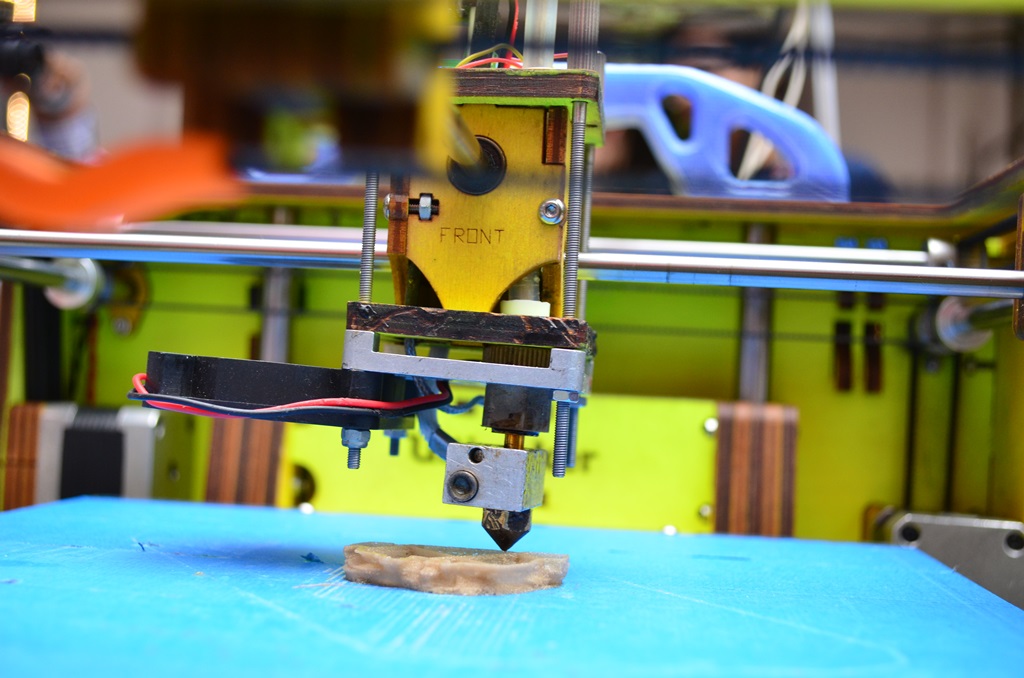
Dubai launches International Centre for 3D Printing

Dubai launches International Centre for 3D Printing


Centre will host 700 companies to make Dubai a major hub of 3D printing technology


Dubai Holding has launched the International Center for 3D Printing to make Dubai an international destination for 3D printing by 2030.
The project, located at Dubai Industrial City, will create a suitable atmosphere and provide the appropriate infrastructure to bring under one roof a network of design and technology suppliers as well as factories.
It will include research centres and laboratories for testing materials used in 3D printed products within an integrated environment dedicated to serve construction, medicine, and consumer products sectors. It will also involve the academic sector, which will add innovation and educational value to this initiative through research and development.
The new project aims to build a network of distinguished companies in the 3D printing sector by attracting entrepreneurs and innovators as well as targeting international enterprises locally and globally by offering special laboratories for 3D printing. It will also offer services, professional training, facilities, storage solution, and other logistical support to strengthen this sector.

“We will work on providing a suitable environment for specialised companies and attracting innovative minds by offering the required infrastructure that match the aspirations of the wise leadership. We believe that the new strategy will be a vital element in creating support for Dubai's key role in the area of 3D printing,” said Dr. Amina Al Rustamani, Group CEO of Tecom Investments.
JOBS
3D Printing Jobs
The centre focuses on providing all the components in an integrated system to take this technology from the ideas and innovation stage to the design phase,  and  provide the materials to a promising market within the, construction, medical and consumer product sectors,” said Saif Al Aleeli, CEO of Dubai Future Foundation.
Al Aleeli pointed out that the Dubai 3D Printing Strategy is particularly relevant to the construction sector considering that the strategy aims to 3D print 25 per cent of buildings in Dubai by 2030. This will create a huge demand in the market and offer large investment opportunities for companies and investors locally, regionally and globally, he added.
“The next phase of the International Centre for 3D Printing is to translate the vision of our wise leadership in the 3D printing domain by providing the latest technology and the best solutions in the industry to meet the requirements of local and international companies in this sector. The centre will offer the advantages of strategic location, advanced infrastructure, developed offices, warehouses, exhibition facilities, not to mention the integrated support system that will enable companies to establish their business. The centre will host more than 700 local and international companies to make Dubai a major hub of 3D printing technology,” said Abdullah Belhoul, CEO of Dubai Industrial City.
Dubai 3D Printing Strategy, which aims to make Dubai a global capital of 3D printing technologies by 2030, will focus on three major sectors: Construction, Medical Products, Consumer Products.
The Dubai 3D Printing Strategy has five main pillars, namely: Infrastructure, Legislative Structure, Funding, Talent and Market Demand.

The recent report of Strategy &, a global research institution, showed that 3D printing is at the forefront global industry trends in 2016 and will play a major role in reducing the manufacturing cost and time in construction sector. The sector will grow dramatically to become an important segment in the coming period, it added.

Tuesday, 20 October 2015

Monday, 19 October 2015

Indoor Snowball Fight

Snowtime Anytime 40pk - Safe, No Mess, No Slush
SNOWTIME ANYTIME
4.9 out of 5 stars  480 Reviews
Indoor Snowball Fight - Snowtime Anytime 40pk - Safe, No Mess, No Slush

  
List Price: $49.99
Price: $36.96 Free Shipping for Prime Members
With Deal:$27.95
You Save:$22.04 (44%)
In Stock.
Sold by ToysNGamesEtc and Fulfilled by Amazon. Gift-wrap available.
This item does not ship to Abu Dhabi, United Arab Emirates. Please check other sellers who may ship internationally.

Tuesday, 13 October 2015

UAE jobseeker alert: Most employers on hiring spree; click for sectors

Most new jobs expected to be created for professionals in middle management roles

Jobseekers in the UAE and the region will have more job options in the coming months as majority of the employers in the country and the Middle East expect new jobs to be created in the next six months.

According to the September hiring outlook survey by NaukriGulf, a jobs website, 58 per cent of recruiters who participated expect new jobs to be created in the months ahead, giving hope to candidates who may be currently looking to switch jobs or find new ones.

The survey was conducted among 140 recruiters in the Middle East with employers and recruitment consultants accounting for 79 and 21 per cent of the respondents, respectively.

A majority are hopeful of new jobs that will be added to the market and certain sectors look more promising than others when it comes to opportunities.
A sizeable number (35 per cent) of recruitment consultants expect construction sector to see the bulk of new job creation.

Construction and its allied sectors are the top choice of consultants when it comes to maximum job-creation. Banking & finance, hospitality and retail are also strong contenders for new job-creation over the next six months.
Most new jobs are expected to be created for professionals in the middle management roles. Forty-four per cent of employers expect new jobs being created for middle management roles (3-8 years’ experience), while 25 per cent expect new jobs to be created at senior management and CXO levels.
“As far as job-creation and hiring scenario are concerned, 2015 looks to be a better year than 2014. With the recent decline in oil prices, oil & gas and related sectors are expected to see a dip in the creation of new jobs.

UAE Jobs

"However, construction and allied sectors continue to grow, given the build-up towards Expo 2020 in UAE, the Fifa World Cup 2022 in Qatar and increased focus on infrastructure development. The overall economic outlook, hence, remains largely positive,” says Tarun Aggarwal, Business Head – Naukrigulf.com.
Employers also expressed confidence of lesser talent crunch and lower attrition in the local job market.
A high number (84 per cent) of the employers say that they are enjoying low attrition rates of less than 15 per cent in their organisations, adding stability to the job market.
Also, 76 per cent employers expect attrition to either remain stable or reduce further over the next 6 months, compared to 68 per cent sharing this sentiment in March 2015.
Reducing the woes of the employers, the second half of 2015 heralds good news with employers expressing an improvement in talent availability.
A majority (52 per cent) of employers are confident of not facing any talent crunch in the next six months as well, compared to only 39 per cent in March 2015.
The survey has also indicated that the maximum talent crunch is felt in the middle management roles (experience bracket of 3-8 years) and among nationalities of Asian origin.

Wednesday, 30 September 2015

New UAE Labour Law: Job offer letters will be legally binding

Any offer letter given to foreign worker will be legally binding once accepted and signed by both parties

Consider it a new year’s bonus.

From January 1, 2016, the UAE will implement sweeping reforms to the existing Labour Law, plugging loopholes that will now make employees even more content and secure in their workplace.

The primary changes to be enforced next year, as outlined by Minister of Labour, Saqr Ghobash Saeed Ghobash, pertain to employment contracts for workers hired from abroad, termination of job contracts, and issuance of new labour permits to resident workers.

As per new regulations, any offer letter made to a foreign worker will become legally binding once accepted and signed by both parties.

The resolution issued by the Minister of Labour mandates that employers will be required to disclose to the Ministry the terms of the offer made to a foreign worker.

The offer letters will be required to be detailed, and must contain a comprehensive description of the rights and duties of the employee, as well as outline the terms and conditions of employment.

The Ministry also requires that the employer ensures that the workers have seen the offer and agreed to its terms in a language that they understand.

This means that there cannot be significant changes between the offer letter and the terms of the final employment contract between a foreign workers and their employer, doing away with the possibility of any confusion or wrong-doing.

To enforce this resolution, the Ministry stipulates that the employee’s work permit at the Ministry of Labour is based on the offer letter that will be stored in the Ministry’s database.

The offer letter to a foreign worker will, therefore, become a legal contract, and the employer will not be allowed to alter or replace any of its provisions unless such changes have the consent of both the parties (the employer and the employee), and that any such changes do not prejudice the right of the worker and are not against the law.

The same holds true for a worker within the UAE, and the worker must sign and agree to the terms of the offer letter before the employer can seek the Ministry’s preliminary approval for his employment.

The UAE intends to enforce a new labour law at the start of 2016 to better regulate the relationship between employers and workers and curb violations to ensure both parties will get their rights.

The new law includes three main rules governing labour contracts for workers from abroad, terminating contracts between the employers and workers and the issuance of a new work permit to a resident worker.

“These rules will take the labour market to a new stage based on a strong and balanced relationship between all parties and on agreement and transparency in contracting to guarantee the rights of all parties,” Labour Minister Saqr Gobash said.

Saturday, 19 September 2015

Which is better.. Keyboard or Piano?

Real pianos are great but the one big drawback is you can’t turn the volume down so with a piano you tend to end up playing for the neighbours. With a keyboard you can stick on some headphones and play whatever turns you on – you can experiment, make mistakes and sound silly and play something a thousand times without driving other people nuts. Ideally – have BOTH! If you are buying a piano it is preferable to buy an overstrung piano not a straight strung! How to tell: Lift the top lid of the piano you should see the tuning pins at the top of the piano. If the tuning pins are evenly spaced along the pin block and the strings are all parallel and vertical this is a straight strung piano. If there is a group of tuning pins at the left and a separate group at the right and the strings cross over in a X shape this is an overstrung piano. Also get a tuner to check it out. I bought a piano once that needed to have the wood treated because all the pins (that tighten the strings) were coming loose very quickly after being tuned – disaster! What Keyboard should you choose? A lot depends on what you want. Do you want a keyboard that sounds and feels like a Piano – then you’re looking for a keyboard or Digital Piano with WEIGHTED keys. Listen carefully to the piano sound – don’t be bamboozled by all the other buttons. If you want something portable then you are looking for a keyboard. Personally I would still look for one with weighted keys – I hate the feel of light plastic keys. Get a keyboard with at least 61 keys – anything less and you will be craving for more keys after a few days. Also make sure get a sustain pedal, a keyboard is absloutely a dead thing without one. Without a sustain pedal as soon as you lift your finger off a key the sound stops dead – with a piano at least the strings vibrate for a second or two – the difference is quite noticeable. Click Here! to know more

Piano practice can be fun too!..

Most people don’t really want to ‘learn’ to play the piano or ‘practice’ the piano, they just want to ‘play’ piano. ‘Play’ sounds like fun, ‘practice’ sounds like a chore. We get this image from childhood – some kid stuck indoors ‘practicing’ scales while all the other kids are outside the window ‘playing’. 

So, first thing we need to do is to see our piano practice in a new light. See it as a way of accelerating the learning process so that SOON you’ll be able to ‘play’ piano and play it well. If you don’t practice and you just play old familiar tunes you move rather slowly. Yes, you’ll get better at playing those old familiar tunes but technically you won’t be pushing yourself to greater heights.
Proper, structured piano practice helps you stride forwards. I say ‘proper’ because a lot of people have an idea that practice IS just playing songs over and over. Practice needs to involve unchartered territory. The golden rule is – ‘practice what you CAN’T play, not what you CAN play’.
First of all, work out what you want to achieve. Do you just want to know all your chords without thinking about how they are formed – then work out a practice routine that leads to that goal. Maybe you want to learn about inversions or chord substitution – again, make the practice fit the goal.
Split your practice session into two halves. In the first half play the difficult stuff – your mind is sharper to begin with – then reward yourself with some enjoyable but reasonably difficult tunes. Make sure you are comfortable. Many a bad back has happened because of a bad piano stool at the wrong height. Make sure your piano is in tune. If you don’t have a good piano and are serious about learning GO BUY A GOOD ONE.
Every fifteen minutes stretch your arms and shoulders and roll your neck to combat stiffness. Check out some Yoga exercises for shoulders and back.
Follow the 3 times daily rule. Repetition in practice is ESSENTIAL. If you find something particularly difficult make sure you practice it at least 3 times every day. Don’t worry if it takes months to master – you’ll get there.
Don’t play for the neighbours. Practice piano at a time when you don’t care who is listening so that you can make lot’s of mistakes and play things over and over. Organise your piano music carefully – don’t keep it in a heap where you keep playing the ones on top. If you download sheet music put it in a folder. Have plenty of shelves near the piano. Be realistic – I truly believe that anyone can learn piano and learn it to an enjoyable level but no two people are alike – some are more ‘naturally’ gifted than others. If you have an average ability then it’s all down to practice. The more you practice the more you learn.
Now and then, practice with your eyes closed – or don’t look at the keys – this really sharpens you up. Organise your life so that practice is possible (this where Mindfulness comes in). Too many people think they don’t have time to practice when really they just haven’t found the time. How long should you practice – that’s up to what you want to achieve. You don’t have to be a concert pianist. Even if you just play for yourself just enjoy that. The archer who’s mind is on the prize cannot stay focussed on the target. Accept the bad days when it seems like you can’t play a note. Sometimes it’s better to walk away. So remember that ‘playing’ piano and ‘practicing’ piano are different. Which do you do? Aim for a bit of both.

Click Here! to know more

Friday, 18 September 2015

Now it's Robo-Doc's turn to treat you


Robot arrives at Hatta Hospital

A robot has been added to the staff at Hatta Hospital’s Trauma Center and will be doing rounds from this week.
DubaiRobodoc was presented at the Interactive Health Forum last week and has only just started ‘working’. He already knows his way to every patient room, and will be providing a helping pair of eyes.
The man behind the screen is Moin Fikree, Medical Director of the Trauma Hospital at Rashid Hospital.
“When a doctor dials in, the patient will actually see me on the screen, while I can observe the patient,” he says.
“I can talk to the patient, observe vital signs, see the x-rays or CPG’s taken and examine the patient by asking him to raise his right arm, open his mouth, stick out his tongue etc.
“I can even listen to his lungs or heart.”
Based on the observations made Fikree can then make his recommendations.
“I can tell the doctor to apply certain medicine, and monitor the patient after the treatment was given. The patient is now out of risk and can be transported to Rashid Hospital.”
DubaiRobodoc was introduced to make specialist health care more available across hospitals run by the Dubai Health Authority (DHA).
As a start one robot has been deployed at the Trauma Centre Hatta Hospital, where no specialists are available at a 24-hour basis.
Especially at the Trauma Centre time can play a crucial role, the doctor explains.
“In case of a stroke, for example, the treatment should be given in three hours. Imagine a patient suffering from an acute stroke in his house. When he arrives in the emergency room half an hour was already lost. The patient must then be examined, and the specialist is not available he must be transported to Rashid Hospital. A lot of time will be lost.”
Although DubaiRobodoc is now the only robot available, more robots will be deployed in the future.
“This can work in all sorts of health related issues, such as a simple skin rash, for example. A general practitioner may diagnose it and refer the patient to a dermatologist.
“The patient then needs to make an appointment, go to another clinic, wait for the doctor, while the same practitioner can dial in with this technology, and the patient will be seen right away.”
Not everything can be done through the robot, admits Fikree. “There are some limitations. In some cases I will need to use my hands, and I will really have to see the patient. But I think it can be done in 75 per cent of the cases, if the patient agrees.”
Asked whether he will be able to handle the large number of patients now requiring his expertise, he says that these patients would eventually come to him anyway. “We would see these patients in any case, but we are seeing them in a different way now.”
The technology has been tested with simulated cases and is now ready to be used in reality. “We saw a patient who suffered multiple injuries after he was thrown out of a car. We diagnosed him, started immediate treatment and then ordered his transportation to Rashid Hospital immediately,” said the doctor.

Dubai developers set ball rolling with mega projects

Details of Expo 2020 plan will unleash private developments as well

Upbeat property developers in Dubai kicked off the day one at Cityscape Global on Sunday with series of new launches – master developments to standalone projects, but primarily targeting the upmarket segment.
Prices in Dubai’s luxury market still are growing at the fastest pace in the world. In the year to March 2014, prices are up almost 25 per cent, though transactions have slowed down.
However, Dubai Land Department said that total value of real estate transactions had crossed Dh155 billion on as of September 2014, and the market was set for further growth.
The new projects launches were apart from the ones that Emirates 24|7 reported earlier yesterday.

The major announcements, once again, came from state-owned developers, however, property experts believe private sector will become active once the work starts on Expo 2020 venue site and all infrastructure plans are unveiled.

In its Q3 Dubai property market report, CBRE, a global real etsate consultancy, said positive market and economic fundamentals over the past 12 months has seen a growing number of developers moving ahead with stalled projects as well as the launch of multiple new schemes within a short time period.
The sales market, however, grew at a slower rate than in previous quarters with average sales prices increasing by around three per cent quarter-on-quarter, bringing the annual growth close to 23 per cent.
The best performing segment of the market during the quarter was found to be high-end apartments, a trend that was also visible in buying patterns with prime areas such as Dubai Marina and Palm Jumeirah seeing the majority of transaction activity, the consultancy said.
Meraas’ La Mer, Jumeirah
Meraas Holding, which is building theme parks and Bluewaters Island launched La Mer, a mixed-use development that will take shape in Jumeirah in the vicinity of Pearl Jumeirah Island.
Construction is set to commence in Q4 2014, the developer said, which is also building theme parks and Bluewaters Island.

La Mer will spread across 9.5 million square feet of existing and reclaimed land. It comprises four distinct zones - the beach, a leisure and entertainment hub, North Island, and South Island and feature commercial, leisure, residential and hospitality components.
“Our feasibility studies have confirmed that La Mer will be one on the projects which will positively contribute to Dubai's economy and set new global benchmarks for beachfront developments,” said Abdulla Al Habbai, Group Chairman, Meraas Holding.

On North Island and South Island, La Mer will include fully integrated residential neighbourhoods that will have 688 apartments and villas and a 160 key hotel.
Midtown by Deyaar
Deyaar Development, listed on Dubai Financial Market, unveiled Midtown by Deyaar - a 5.5 million square feet “upscale” master development adjacent to the southern end of Jumeirah Golf Estates.
“Midtown will continue Deyaar’s tradition of quality projects taking design-led luxury living to a new level in the region. This project will create a distinctive cultural ambiance that enriches the lifestyle of its occupants,” Saeed Al Qatami, Chief Executive, Deyaar, said.
Midtown by Deyaar will include a total of 27 buildings and will house two hotels on the northern and southern tips, along with 13 separate residential buildings on the east side of the development, and 12 buildings clustered into four groups.
While three buildings are joined into one group on the west side of the master plan, all the 27 buildings will share a one level podium covering retail, parking, and essential services.
Nakheel’s The Palm Gateway
Nakheel launched The Palm Gateway – a three-tower waterfront living and leisure complex with more than 1,300 homes, a beach club, retail, dining and health and fitness facilities.
The Palm Gateway comprises three individually - designed high-rise residential buildings – the tallest topping 260 metres – with one, two and three bedroom apartments, available for lease.
The trio of towers will be constructed on the existing Palm Monorail Gateway terminal, the roof of which will be transformed into a 15th floor podium with infinity pool, shops and sports facilities set in extensively landscaped grounds.

Palm Gateway will also have its own beach club and park – a shaded, landscaped complex with a diverse range of waterfront dining and shopping options, pool, barbecue areas and fitness facilities, including a jogging track.

Meydan’s District Eleven


Meydan Group announced two major new projects: Mohamed Bin Rashid Al Maktoum City District Eleven and Meydan Avenue, two mixed-use developments.
District Eleven is a suburban mixed-use community development featuring parks, private schools and retail businesses with two prime residential areas. The residential areas cover a total ground floor area of 450,000 square metres and 210,000 square metres, respectively.

One of the unique elements to District Eleven will be Kent College Canterbury – Meydan, a partnership between Meydan Group and one of the most respected educational institutes in the UK. The school will eventually accommodate up to 2,000 students; sport and recreational facilities will include football and rugby fields, cricket grounds and a running track.

Meydan Avenue, which was previously known as Diamond Business Park, will offer a blend of residential, commercial, retail and recreational
facilities enhanced by the sports and leisure attractions.
Completing the range of developments at Meydan Avenue will be the new Meydan Headquarters, a 17,500 square metres facility with 11,600
square metres available as leasable office space to local and international businesses.

Meydan Chairman, Saeed Humaid Al Tayer, said, "We are building desirable communities in Dubai which will become integral areas for living and working in the years to come. It’s an exciting time for us at Meydan as construction is underway on both of these major new projects and will soon be coming to life."
DP’s Maram Residence
Dubai Properties (DP) launched Maram Residence in Burj Khalifa district, a two-tower project.

“The project will cater to the increased demand for luxury residential and commercial property in strategic locations across Dubai, and we anticipate that its launch will further support the development of Dubai by catering to its growing population,” said Mohammed Alhabbai, Chief Officer for Urban Planning and Infrastructure at Dubai Properties Group.
The two 27 storey towers will have unit options including one-, two-, three- and four-bedroom apartments along with six exclusive penthouse suites.
Maram Residence will include a business lounge, an indoor children’s play area, an outdoor children’s play and pool area, a state of the art gym and fitness area, a jogging track, a sky Garden with seating areas and water features, and an infinity pool deck at roof level with a lounge for an ideal urban living experience.
Contract awarding process has begun, with the piling and enabling contract being awarded to NSCC Contracting Company.

Damac’s Paramount Hotel


Damac Properties and luxury hotel operator, Paramount Hotels & Resorts launched Paramount Hotel Dubai, Downtown. Housing 1,250 rooms and suites, the hotel will showcase timeless Hollywood elegance with Californian lifestyle and integrate elements of Paramount Pictures movies through high tech media mapping and digital signage.
Concept design of the project which will be developed on a plot located just off Sheikh Zayed road in the Downtown area is already underway with the hotel set to open its doors in 2018.
“The number of visitors to Dubai is set to double in the next six years and the Paramount Hotel Dubai, Downtown will support the growth with a high-end, theatrical and immersive experience for international tourists,” said Ziad El Chaar, Managing Director, Damac Properties.
Close
Ads 2
Ads 3